Friday, February 21, 2014

Vanitas, Still Life or Genre?

A typical genre painting image of a scribe or calligrapher almost frozen while writing came to me a while ago after I bought calligraphy set. I thought about another “Vermeerish” image, with the light, window, etc. But then, he never gave men leading roles in his paintings, they were all women, even when a man or two were in the picture. Additionally, I had trouble with the monk-look of my protagonist, there were almost nonexistent in Calvinist Netherlands United Provinces. Finally, I decided to include some recognizable Dutch objects like the map in the background and Delft tiles as baseboard. The scribe looks like frozen which is a Vermeerish characteristics, all his models were like that, never moving….almost like still lifes. In a sense, he was a still life painter.

Anyway, I digress, I thought then about incorporating some Vanitas characteristics and that’s why there is a pear on the edge and a candle which symbolizes the transience of life and the temporary nature of our existence. The books are a symbol of education and a way to keep our thoughts for eternity, which is what the character is doing by writing. In this sense, this could be a Vanitas, I leave the judging to you. 

Feel free to connect with me in Facebook or Twitter

Tuesday, November 19, 2013

I have been very busy preparing for next week's Fine Art Photography Exhibition at the McKay Art Centre in Unionville, Markham. I will be exhibiting some of my "Vermeers", Dutch Still life, some Bodegones a la Luis Melendez plus some of my work on Iceland, the US Southwest and other terrestrial wonders.

If you have read any of my posts about Dutch classic paintings and my photographic explorations of them, you may be curious to see them in real life. Well, you can easily do that by dropping by the McKay Art Centre from Nov 27th-Dec 1st (10:00 am - 5 pm see below for more details). I will also be there on Friday evening, Saturday and Sunday in case you want to meet me and chat with me or Ron Rehfeld.


Feel free to connect with me in Facebook or Twitter

Tuesday, October 22, 2013

Why Vermeer?


Whenever I exhibit or present my work, I get asked why I chose Vermeer’s oeuvre for my “photographic paintings”. Was is it just to replicate or copy what the Dutch master painted? 


Well, yes and no. Some of my “Vermeer“ photographs are very similar to the Vermeer painting, but others are completely different, while still being faithful to his lighting style. My intention was to create a composition and a story that could explain the context of a particular Vermeer painting. Sometimes my photograph would explore (fictionally, of course) what happened before, or after the moment represented in Vermeer’s painting. Some other times,, it would be a totally different image that would explore other fictional moments of Vermeer’s life. E.g. A Pronkstilleven from Vermeer to Kalf or Girl painting a dollhouse

In a sense I wanted to replicate his paintings but just as a starting point. In every case, I created my own story to explain what was happening or happened in the moment captured in the image. I profusely used known facts from Vermeer’s life and from Dutch life in XVII Century, including many hand-made artifacts and replicas.

The Story

As I stated in many of my previous posts, I have always been fascinated with classic paintings, not only the technical craftsmanship and skills required were simply exceptional; but they also required a lot of creativity. Just imagine how many different ways you can think of representing a conversation between a soldier and a woman, or how to represent Greek goddesses in the “Judgement of Paris”, or how to represent David before, during or after his battle with Goliath. So, the masters; Bernini, Vermeer, Reubens, Hooch, Michelangelo and others had to go through the same process, they had to think about it, imaging it and then paint it or sculpture it. 


In other, words just technical skill would not have made these pieces the masterpieces there are regarded as today. Their particular selection of a composition, colors and twist in the story made the difference. A good example would be to look at the representation of David by Michelangelo (in the Accademia, Florence), Donnatello in the Bargello, Florence as well and by Bernini (at the Gallery Borghese, Rome). Same character, but what a difference in message. My point is that the artist mind, his/her imagination and its interpretation is as important as the technical skill to paint it. Every piece of art out there looks easy or easier once is done. But coming up with it is what makes some people artists.

Vermeer’s paintings do not represent known stories, he chose to paint about simple moments in the life of middle class and wealthy Dutch people in XVII Century United Provinces. Therefore, for me they represent the starting point in a story, what were they doing? What happened before or after the moment represented in Vermeer’s painting?

The Camera Obscura and the Sketches or the lack of them and

Unlike most painters, Vermeer left no sketches or drawings. Apparently, he just went straight to painting whatever he imagined. One theory revealed by Philip Steadman in his book “Vermeer’s Camera: Uncovering the Truth behind the Masterpieces “is that he used a camera obscura to get the scene proportions, perspective and sizes. Professor Steadman goes into lots of detail about this in his book but also in an interview with “Essential Vermeer”. Click  here if you are interested in reading the interview.

If true, it would make Vermeer a painter who used an optical (the camera obscura was the pre-cursor of the photographic camera) device to capture the scene. Since there was no photographic paper at the time, Vermeer had to capture it “live” on paper, canvas or some sort of surface then, paint over to achieve his masterpieces. It would make him almost a “photographic painter”, I know I am stretching it, but I couldn’t resist.

Connecting the dots

Now you can see where everything starts connecting, I thought about exploring his works in terms of the story and techniques. That is, explore the story of what happened before, after, during or while Vermeer was producing his masterpieces, but also some other aspects of his life. A good example would be his relationship (or lack of it) with other successful painters of his time like Kalf and Rembrandt.


You can see how my photographs are almost like those sketches, which have never been found. In his time, painters would produce many sketches, then they would choose one and paint it. If Vermeer had a camera he would have taken many photos until happy with one (which is what Photographers and some painters do today). Using the camera obscura, would have allowed Vermeer to quickly explore and assess different compositions and discard whatever he did not like without having to draw a sketch. Smart! That would easily explain why he did not produce sketches or drawings (this is part of Professor Steadman’s theory)


I took on myself to create a possible story that explains the image, then create it using a more advanced device than Vermeer, but trying to maintain his style in terms of lighting… which is what photography is all about. (From the Greek photos that means “light” and, graphos that means “drawing”)


Have I succeed?  I leave that to your own judgment.

Feel free to connect with me in Facebook or Twitter

Sunday, September 1, 2013

Girl with a Pearl Earring


This painting is one, if not; the most widely known of Vermeer's  works. There is a lot of mystery about who this girl was and the fancy head scarf. Hollywood capitalized on the popularity of this painting and made a movie in 2003 with the name "Girl with a Pearl Earring" (http://www.imdb.com/title/tt0335119/). The movie uses many known facts from Vermeer's life, including the Master relationship with Pieter Claesz Van Ruijven, a wealthy Delft citizen who was also Vermeer's main patron. The movie weaves its story around a house maid that creates a strange and tense relationship with Vermeer and Pieter Van Ruijven. Van Ruijven and his wife Maria de Knuijt were his main patrons and owned most of Vermeer's works. Therefore the movie explores the tense relationship between the wealthy patron and Vermeer's family dependency of his will and whims. As a result, the maid ends up being the model for the now iconic Girl with a Pearl Earring.


In reality, nobody knows who the model was or why would Vemeer choose such a fancy headscarf. There are no other visual references to such a garment anywhere else. The headscarf is definitely an outlier,  it was a very unusual in those times  and probably today too. I think he just wanted to draw attention with a colorful prop.

Since I have been exploring Vermeer's work with my photographic tools, this is one painting that I had to address. Like all other previous paintings, I wanted to add a plausible story of my own. I ended up with three related photo paintings exploring the subject.

First, the actual Girl with a Pearl Earring (top right), here is my story. Vermeer asked one of his daughters to model for a new painting. Times are tough and he cannot afford a professional model. He finishes the painting of his daughter which he plans to modify later making her look older for the commissioned painting. Painting in layers is a common practice for oil painters and specially at the time. Xrays have revealed all sort of objects and subjects being modified and or completely erased by a new layer of paint.


Second , what happened before the model posed for Vermeer. Girl With A Pearl Earring Blowing Bubbles. The story goes as; Vermeer has started to work in a new painting that features one of his daughters wearing a fancy headscarf and pearl earrings borrowed from his wife Catharine Bolnes. His daughter got ready for the modeling session and she is in the room waiting for her father. He is out, he went to purchase some lapis lazuli to make the paint he needs for the blue portion of the headscarf. His daughter sat in the room for a while, but it didn't take long before she got bored. Then, she grabbed one of Vermeer's unused clay pipes and with some soap and water she started to blow bubbles, she is back at being a kid.


Third; Girl With A Pearl Earring At A Window. After the tense modelling session, the little girl is now calm and at the house window, where she was looking outside her constrained inside world. 

Feel free to connect with me in Facebook or Twitter

Monday, July 8, 2013

Vermeer and the Virtuous Maid

One of Vermeer's most admired works is the Milkmaid or Kitchen Maid hang at the Rijksmuseum, Amsterdam.

It is a simple composition of a typical house maid in XVII Century Netherlands pouring milk into a bowl. Her face expression conveys absolute and complete absorption in a menial task. This was one of Vermeer earliest works and the only one in such modest room as the kitchen. He quickly moved into fancier, more affluent subjects.

Marjorie E. Wieseman in her book Vermeer's Women attribute the solemnity of the Milkmaid task as a way for Vermeer to attribute virtue to maids, who were generally viewed with suspicion at the time. Maids were normally pictured with her mistresses or sleeping on a table, or listening to a conversation in other words either as secondary subjects or suspicious main ones. In a stark contrast, Vermeer shows us a painting where the maid is the main subject AND she is putting all her attention into her job, no matter how menial it may seem. It is this, the fact that she takes so seriously such a simple job what makes the maid virtuous.

I loved the idea of conveying virtue by picturing solemnity in a menial task, but I chose a different subject, one that allows me to blend a Vermeer subject with a Bosschaert (Ambrosious Bosschaert the Elder) subject which is another favourite of mine; flower bouquet paintings. 

Here is my image and my story that goas as:
A girl is graciously arranging a flower bouquet to honour important evening visitors, Pieter Claesz Van Ruijn and his wife Maria de Knuijt. They are Jan Vermeer's most important patrons and are coming today to look at his newest painting of a girl wearing a pearl earring. Money is tight; hence, the Vermeers are hoping that Van Ruijn will like the new masterpiece and purchase it.

They are trying to embellish the house with their best pieces for the event. They wanted to impress Van Ruijn and his wife, therefore they invested a small fortune in a flower bouquet, that include the latest arrival of exotic flowers from Turkey; tulips and an Iris which symbolizes the trinity. They also hung a still life painting from Pieter Claesz, the famous Harleem painter. They thought that since he has the same name as Van Ruijn it would make for a good conversation.

The little girl is completely absorbed in her task, totally unaware of the tension around the patrons visit and the implications of the results. She innocently and happily arranges the flowers, completely unaware of what worries the adults. She is humming her favourite song while her innocent mind is solely occupied by her admiration of nature's power to produce these wonderful colourful creations called flowers.

Follow me in Facebook


Tuesday, May 28, 2013

Vermeer and Willem Kalf’s Pronkstillevens

Although Vermeer quickly moved from humble (the Milkmaid) to more affluent subjects, he never took it to the level of Willem Kalf and followers. Kalf developed a style called “pronkstilleven” or “ostentatious still life” , these were highly detailed paintings portraying the riches of the very rich in the Dutch Republic. A typical pronkstilleven would be an arrangements of Nautilus cups, very decorated silver jars, (Wan-li a.k.a Kraak ) fine Chinese porcelain, buckelpokals, outrageously expensive oriental rugs, expensive weapons, works of art, etc. Kalf normally placed them on tables but some of his followers like Jan Davidsz de Heem, Van Beyeren and others used rooms. 

Kalf was also a successful Art dealer, based in Rotterdam, a City with access to the sea and the home of many rich and wealthy Dutch merchants. In contrast, Vermeer lived in Delft which was a more modest city. Vermeer lacked the rich patrons of Amsterdam and Rotterdam. His main patrons were Pieter Claeez Van Ruijven and his wife Maria de Knuijt who amassed most of Vermeer works, twenty-one of the thirty-five known today.
 
So, this is the background information. I thought about a story that would connect Vermeer and Kalf so that I could explore it visually. Here is what I got:
 
Vermeer started looking for new patrons or dealers that could help him break the lock that Pieter Claesz Van Ruijven and his wife Maria de Knuijt had on his works. Van Ruijven paid him well, however, Vermeer he thought that he could get higher prices from other sources. After all, Rembrandt Van Rijn was being paid handsome sums in Amsterdam for his historic paintings so why not him in Delft.
 
One of his colleagues in the Delft’s Guild of Saint Luke, suggested to him to meet Willem Kalf, a well-known painter, turned dealer and appraiser who lived in Rotterdam. (the photo painting at right was inspired by the works of Abraham Van Beijeren who was one of Kalf's followers)
 
Vermeer took his favorite showing piece “Allegory of Painting”; and went to see Kalf in Rotterdam. He was quite impressed by Kalf’s detailed works that included richly decorated silverwares, Chinese porcelain dishes, fancy Venetian glasses and exotic fruits. Vermeer however, did not like the darkness and fuzziness of Kalf’s backgrounds, he decided to try a different approach by incorporating some of Kalf designs but make them his own. He then included similar objects in but used his recognizable background (see at right) with the light coming from the left, one of his Spanish chairs and included one of Kalf’s own paintings (this particular one is closer to a Van Beijeren) in the background. This way he was sure to impress Kalf enough, to obtain representation.


Feel free to connect with me in Facebook or Twitter

Friday, May 3, 2013

How to Photograph your own Vermeer. Part II – Post-Processing

Let me start by saying that in the last couple of years several photojournalists have been caught modifying their photos to deceit editors and ultimately people. This practice is obviously dishonest, wrong and in some cases almost criminal. Unfortunately, it has created a perception that using tools like Adobe Photoshop is deceitful and all the other negatives connotations that follow. However, when manipulating photographs for artistic reasons, tools like Adobe Photoshop, Corel Draw and others are just that; tools. They are not different than adding a newspaper to a painting, or using brushes or dripping paint or whatever tool or technique the artist deem necessary for his work.

I am unapologetic about the use of any tool I find worthy to help produce my work, including Photoshop, Lightrook, Nik Software (recently acquired by Google) etc. Let’s be clear, artists produce fiction, NOT reality. Painters produce visual fictions, just like poets and writers create fictional stories. Movies are also fictional even when portraying real stories. Now that the premise has been established, I will dive into the Post-processing of some of my work, specifically the Vermeer series.

RAW

I shoot ONLY RAW as they have a higher dynamic range than JPGs. RAW images present colors quite muted which normally do not reflect what you saw in reality. In short, if you shoot RAW you MUST process them, which I normally do in Adobe Lightroom.

The Problems

First, I look for what has to be corrected, that is:
  • Geometric Lens distortions caused by the lens, vertical or, horizontal position of the camera
  • Color problems, e.g. chromatic aberration, noise, etc. RAW processing always means a vibrance and saturation boost.
  • Exposure (if applicable)
  • Cropping and Alignment: I sometimes use the Golden ratio, Rule of thirds or triangle depending on the image. When possible, aligning the image and its cropping with one of these, normally produces a more pleasant composition.

Enhancements

Once I have corrected what I feel is technically wrong, I concentrate on enhancements. If we use the “Girl with a Pearl Necklace” (see finished photo painting at left) as an example, I felt that to get closer to the painting-look that I wanted; I needed to darken the shadows a bit to create more contrast. I also normally boost “clarity” a bit. Lightroom has a “Tone Curve” adjustment widget that allows very good control of the tonalities based on values captured on the actual photo. You can see the histogram in the background.

Using this tool you can click on the rim of her face and boost the highlights. Using the same tool you can also darken shadows in the back wall to create a more effective painting look. At the end, it is all about creating that vision you have in your mind of what the final image should look like.

Another enhancement I find useful, is to warm the temperature a bit. I find that most paintings of the period had a warm tone.

 Additions

At this point I had to leave Lightroom and launch Photoshop carrying Lightroom edits. This was necessary because I needed to clone out a piece of brick wall that appears at the lower left. The fabric that I use for the curtain was also split and needed to cloned in. You can see what I mean in the picture at right.

Another reason for going to Photoshop, I want to have any enhancement applied as a layer in the PSD, so that I can come back at anytime and work on it, turn it on or off. This is not currently possible in Lightroom which does not support layers, masks. It is just a RAW processing environment.

Photoshop also allows blending textures which I have done for some of my still life photographic paintings. That’s how I include the cracks or sometimes the grungy vignetting. Over the years, I have accumulated a wide variety of textures by photographing walls from Cordoba, Spain, cracks in the walls of Van Horne’s house in Saint Andrews, bark from Sequoias in Mariposa Grove, tin walls from Bodie, skies from Calgary, Toronto, Madrid, etc. You can see what I mean in the capture below, which is just few of them. I am always looking for these whenever I go. As per today I have 187 of them.

Textures produce interesting effects in the photos depending on the blending mode used. I have used textures in just a couple of the Vermeer series, specifically “A Vanitas for the Stadhouder”, but not in “Girl with a Pearl Necklace”. 

Lastly, I convert the colors from Adobe RGB 1998 to sRGB for publication on the web. I keep the “original” PSD in Adobe RGB 1998 which is a wider colors map.
Feel free to connect with me in Facebook or Twitter


Saturday, April 27, 2013

How to photograph your own Vermeer


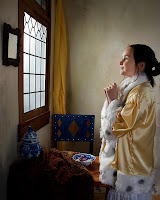
I know that readers will think that I am a bit crazy, but yes! I built a set in my studio that looks like the typical “Vermeer” corner you see in most of his paintings (example at right my own exploration of “The Letter Reader”  a.k.a. “Girl reading a letter at an open window” c.1657 oil on canvas (84 x 65.5 cm) Staaliche Kunstammlungen, Dresden).

Recently a group of enthusiastic photographers under the 365project have challenged themselves to use my Dutch Golden Age photographic paintings as the basis for their exercise. You can see below what they want to accomplish.


They contacted me and asked me how I lit my “Girl with a Pearl Necklace”. They also wanted to know what kind of post-processing I used.

This is something I was planning to write about at certain point. When I exhibit my work I get to talk to many people and; more often than I could expect, they tend to think that everything was done using software like Photoshop. So, revealing “my secret” is something that I felt should be done, so that people realize how much work goes into these works.

I would say that, a successful re-creation or a work inspired by of a Dutch Golden Age masterpiece must have recognizable features from paintings of the period. In a nutshell you will need a set, the lighting, props and a costume.

 The Set 


I could not see any other way of making these photographic paintings; it will give me total control over two very important aspects the lighting and the window. 

The light will always come through the window as in Vermeer works and the actual window, which I had to make sure I could open or close as needed.


I started by building a window that look like the one in the painting above. This particular design appears in several Vermeer works, it is a very recognizable feature, almost like a stamp. The window also serves as a diffuser of the incoming light, and, its reflection on glass would work for my other Dutch Still Life works; Ointbijtjes, Pronks and Vanitas.

Arm yourself with patience for this one as you would need to design and transfer the shapes for the glass. I used CorelDraw to trace the window from Vermeer’s own “The Letter Reader” where you can clearly see the window. Then “transformed” it to a flat shape, printed it with the measurements corresponding to my window and transferred the design to an acrylic sheet. Once marked, I used wood trims which I painted with wrought iron paint. You can see it in the photo at right.

Then, I built the walls with some light material that comes in 8x4’. You can get those at any building supplies store. I built a frame behind for stability and then plastered the wall, smoother it with sand paper and painted it using watercolors to get that old look. See at right.

I also made the “Delft” tiles with XVII century motives that can be seen in Vermeer, Peter De Hooch and many other Dutch masters' works of the period. One of those tiles became the logo for my site and blog. See detail at right from my "The Milkmaid has Left".

Same for the typical white and black marble floors, for this I "hired" my daughter who is also my model, to make a Vermeer-like tiled floor with white paper.

Lighting

Dutch and Flemish paintings of the period had very recognizable lighting, some of them emulating Caravaggio, who had a formidable following amongst Dutch painters. Most Dutch painters set up studios with windows facing the north to maximize the light hours of the day. I emulated that by using Strobes in my studio, where I have 100% control of the light source, intensity, direction, softness or hardness.

The lighting for the “Girl with a Pearl Necklace” is not different than any of the other Vermeer’s I have shot (you can see my Vermeer Gallery here). A strobe with a soft box behind the window. It may be more clear now that you can see the set and the original photo in this Lightroom screen capture. Note that this is the RAW file straight out of the camera with zero processing. The nice light on the rim of her face is achieved by accurate metering of the light.
Depending on the scene I may use a reflector on the side to fill in some light coming through the window.

 Props

You will need Chinese porcelain dishes or imitations. The Dutch were fascinated with Chinese porcelain and they were a definitive status symbol. The porcelain dishes used by most masters, including Vermeer where from the Wan-Li period a.k.a. as Kraak porcelain, the drawings were crude but the dishes were very thin. I ended up drawing my own using thin white plates and permanent blue markers. There are plenty of Wan-Li dishes photos if you Google them, I copied some designs from them.

Persian or oriental rugs (to be placed ON the table). These were outrageously expensive in XVII Century Netherlands; the Dutch placed them on tables to avoid stepping on them. I found some worthy rugs for these Dutch photo-paintings at Toronto’s St. Lawrence Market, but I was unwilling to bargain down from the $300 the seller was asking. I have used upholstery instead, which has a thick fabric and visible texture.

I have collected an incredible amount of props for these works: A skull, hexagonal hourglass, a writing tools box, quill and ink tank, candle holders, candle snuffer, salt cellar, etc. 

Some of these props are impossible to purchase so I had to build or create myself e.g. foot warmer (see "The Milkmaid has Left" detail above), a map (you can see it here), fancy writing utensils box (see it here), a balance (see why at right), etc.

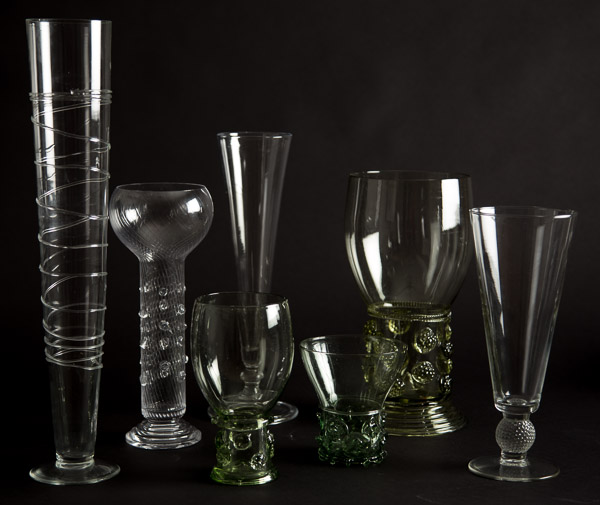
Replicas of glassware from the period; that is a roemer, berkemeyer, passglass or pala galss, flute glass or the more rare Venetian glasses (I haven’t been able to find one).

 The First Shot

After all this hard work, I was excited and also a bit apprehensive as well. Is it going to work? Would I get the lighting I wanted? I was very pleased with the outcome. Here is the first ever shot, straight out of the camera with zero processing other than converting from RAW to JPG for publication here.

If you know Vermeer’s work, you can easily see what I was shooting for “The Milkmaid” a.k.a. “The Kitchen Maid”. You can see the finished version here

 To be continued…..

Next post I will cover post-processing.


Feel free to connect with me in Facebook or Twitter