Showing posts with label Vanitas. Show all posts

Monday, February 9, 2015

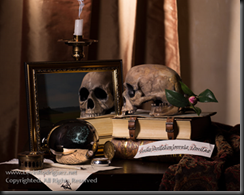
Selecting and Arranging Objects to convey messages in modern Vanitas images. Prose statements in Vanitas.

Most people think that Vanitas images are “dark”, which; if you have been reading my blog you would know by now that this is not the case. Vanitas paintings were about the existing strict moral code in Calvinist Dutch Republic not about “Goth culture/subculture”.

Vanitas were very popular and many Dutch painters made a living from them. Antoine Steenwick, Peter Claesz, Harmen Steenwyck, David Bailly, Willem Calaesz Heda, Jan Davidsz De Heem and others.

After reading and researching a lot about the Dutch Golden Age, my own take is that Vanitas paintings were popular because the wealthy used them as pre-emptive “show off” pieces. That is, to tell the world about their awareness of the moral decay that can accompany wealth (specially unearned wealth). By hanging one of these pieces in their homes, the wealthy wanted to tell visitors “although I am rich, I follow our moral code (I have God teachings present in my life) and I am aware that wealth is temporary”.

Once you understand this, it is a lot easier to compose images that follow that line of thought. Here are good examples.

image

image  image
Feel free connect with me in Facebook or Twitter

Friday, February 21, 2014

Vanitas, Still Life or Genre?

A typical genre painting image of a scribe or calligrapher almost frozen while writing came to me a while ago after I bought calligraphy set. I thought about another “Vermeerish” image, with the light, window, etc. But then, he never gave men leading roles in his paintings, they were all women, even when a man or two were in the picture. Additionally, I had trouble with the monk-look of my protagonist, there were almost nonexistent in Calvinist Netherlands United Provinces. Finally, I decided to include some recognizable Dutch objects like the map in the background and Delft tiles as baseboard. The scribe looks like frozen which is a Vermeerish characteristics, all his models were like that, never moving….almost like still lifes. In a sense, he was a still life painter.

Anyway, I digress, I thought then about incorporating some Vanitas characteristics and that’s why there is a pear on the edge and a candle which symbolizes the transience of life and the temporary nature of our existence. The books are a symbol of education and a way to keep our thoughts for eternity, which is what the character is doing by writing. In this sense, this could be a Vanitas, I leave the judging to you. 

Feel free to connect with me in Facebook or Twitter

Tuesday, November 19, 2013

I have been very busy preparing for next week's Fine Art Photography Exhibition at the McKay Art Centre in Unionville, Markham. I will be exhibiting some of my "Vermeers", Dutch Still life, some Bodegones a la Luis Melendez plus some of my work on Iceland, the US Southwest and other terrestrial wonders.

If you have read any of my posts about Dutch classic paintings and my photographic explorations of them, you may be curious to see them in real life. Well, you can easily do that by dropping by the McKay Art Centre from Nov 27th-Dec 1st (10:00 am - 5 pm see below for more details). I will also be there on Friday evening, Saturday and Sunday in case you want to meet me and chat with me or Ron Rehfeld.


Feel free to connect with me in Facebook or Twitter

Thursday, April 18, 2013

Vermeer and Vanitas Paintings–Part II


As discussed in my previous article, there is no explicit Vanitas painting credited to Johannes Vermeer. The closest we can find is a skull and bass viol in the background painting of “A Lady Writing (see at right). I altered the colors of the painting to make the bass viol more obvious. I really can’t see the skull but eye witnesses say is there. You can see this masterpiece at the National Art Gallery in Washington, DC.

I thought that it would be quite appropriate to use typical vanitas symbols in a photographic painting that would be addressing Vermeer’s passing. Which is the story behind the image at bottom right. It pictures a fictitious moment after Johannes Vermeer passed away. The recent war with Spain had collapsed the market for paintings and forced the Vermeers to live on credit for a while. As is widely known, when he died, Catharina Bolnes (his wife) was left with very heavy debts that she had to honor. The archives in Delft have a detailed inventory as you would expect from the Dutch, of all Vermeer’s possessions when Catharine filed for bankruptcy.

The image shows a time after she sold out most of the house furniture and valuable items to pay angry creditors. An unfinished painting leans against the wall, a creditor started to rip it out but then, he realized that it has no value as Vermeer did not sign it.


An empty, tipped- over berkemeyer glass is lying in the floor (a typical vanitas symbol for fleeting nature of life and time), certainly an object worth a place in a museum today, but of no value at the time. A letter of credit was thrown on the floor by a creditor who wanted to show his contempt for the family. The whisk in the extinguished candle signifies the end of Vermeer’s life and the fragile nature of our existence.

The image tries to convey the emptiness, desolation and overwhelming feelings that Catharina must have felt with her husband passing. Not only is she now responsible to carry the house, but also to raise the eleven children left.

Follow me in Facebook

Friday, March 22, 2013

Vermeer and Vanitas Paintings

Vermeer did painted allegories; we know at least two of them: Allegory of Faith and Allegory of Painting. However, although very fashionable in his time, there is a notable absence of “memento mori” symbols in Vermeer paintings.  He never used typical vanitas symbols like skulls, watches, decaying flowers or just snuffed candles. Many of his paintings included musical instruments (music was an indulgence of the senses) but they were normally related to the scene e.g “Girl interrupted in her music”, “The Music Lesson:” , “Woman with a lute”, etc. He must have known about these pieces, they were very popular in the United Provinces. Maybe, because he converted to Catholicism when married.

However, according to the Essential Vermeer site “A Lady writing”, in display at the National Art Gallery (NGA) in Washington has a painting with a bass viol in the background. They believe is the same found in the inventory compiled after Vermeer’s death, listed as “bass viol with a skull”. If true, this would make it the only clear Vanitas presence in any Vermeer painting.

I downloaded the high resolution image and inspected it as best as I could and I can’t see the skull. Maybe I have to go to Washington to confirm it.


In any case, following my theme of exploring possible still life themes with Vermeer characteristics, I thought that the vanitas theme had to be addressed. This is the premise behind the “A Vanitas for the Stadhouder”.

The premise of the image is that Vermeer has been commissioned by the Stadhouder or City Holder. Normally one of the most powerful persons in the province. As he is immensely rich, so he thought that it would be a good idea to make a statement about his adherence to Dutch traditions of modesty and spiritual elevation; an unwritten rule of acceptable behavior at the time.

According to my story, the Stadhouder commissioned Vermeer to paint a "Vanitas" for his office. These were fashionable pieces that communicated restrain and humility and adhesion to the established moral of  standards at the time. A Vanitas painting with his own portrait would serve as reminder to all visitors that he is fully aware of the transient nature of life and therefore the need to avoid vanities while maintaining a adherence to the Calvinist teachings.

He chose the pieces wisely, following the latest trends set by Pieter Claesz from Harlem and Steenwijck in Leiden. On the table, a rich oriental carpet has been pushed aside to make room for a mirror as symbol of vanity and therefore something to be avoided, a skull to remind us that death is unavoidable and that we should not be overwhelmed by earthly riches, an hourglass remind the viewer that time is passing quickly and therefore should be used wisely. The smoke from the extinguished candle symbolizes the ephemeral nature of our existence, wealth and knowledge.

Feel free to connect with me in Facebook or Twitter

Thursday, July 5, 2012

Modern, photographic renditions of Pieter Claesz paintings. Vanitas and Onbijt.

Most of these images are scattered throughout my previous posts. I thought that it would be good idea to compiled them into one post for easy review/access. The images at left are Pieter Claesz paintings, at right my own photographic version.

Still Life with Lit Candle. (1627)
Vanitas Still Life with Oil Lamp and Writing Utensils. (1628)

http://levin-rodriguez.pixels.com/featured/vanitas-with-skull-writting-utensils-watch-and-anemone-levin-rodriguez.html
Brass candlestick, writing materials, letter pocket watch and anemone" (1625)


Still Life with Wine Glass and Silver Bowl


Still Life with Oysters (1633)

Vanitas Still Life with Violin and Glass Ball. (1628)


Still Life with a Large Roemer

Saturday, May 19, 2012

Still Life Themes during the Dutch Golden Age

The masters of the Golden Age produce several different themes of paintings; here is a brief description of the most common ones:


Bouquet of Flowers: One of the reasons that these paintings were popular among the wealthy in XVII Century Holland is because paintings were considered to outlast nature and life. Having a painting with a bouquet of flowers was a secure way to have beautiful flowers to admire in winter which was pleasant and broke the monotony of the white covered landscape. Ambrossius Bosschaert the Elder was considered the “father”of this type of still life, his paintings commanded very high prices and he had many, many apprentices. His brother-in-law Balthasar Van der Ast became a famous painter on his own. 

http://fineartamerica.com/featured/little-breakfast-berkemeyer-oysters-and-bread-levin-rodriguez.htmlOintbijt or “Breakfast”: Willem Claesz Heda and Pieter Claesz were the creators and masters of the  “Small Breakfast” pieces (Ointbijtjes is Dutch for small breakfast), these pieces were displayed objects made of silver, pewter, etc., very detailed, but lacked color or the sense of lush, exoticism that characterized later works during the Golden Age. They were mostly almost monochromatic; due to the limited color palette used in most of these pieces, they look quite similar.  
There is also a theory out there that they used these colors because they were economic and also, by limiting the color palette the painters could increase their profit. A typical breakfast in the United Provinces  at the time included wheat or sometimes white bread, butter, pickled herring, cheese, fried fish. It did not included wine as seen in many of these pieces, they do not represented a typical breakfast, they were just called that way.


Banketje or “small banquet”: Banketjes were very similar to breakfast pieces but, the food items were what were typical in wealthy home in XVII century United Provinces dinner. These pieces also displayed more sophisticated objects. Heda and Pieter Claesz were the creators and masters of this style. Other masters like van Beyeren named his pieces as banketjes but they were more colourful and with richer objects, looking closer to “pronkstilleven”(see next) pieces. A normal main meal in a wealthy home would include fish or meat dishes, soup, porridge, or Hodge porridge with meat. Note that the lunch was the main meal of the day, normally eaten at noon.
Pronkstilleven or “ostentatious still life”:  This was the favorite theme of While Kalf (1619-1693) who is regarded as the “father” of this style. Adopted by  Peter Van Beyeren, Pieter the Ring, Janz Davidz de Heem, Floris Claesz van Dijck and later painters who choose sumptuous objects and very vivid colors. Pronks as they are called also included small “vanitas” items like a watch, or small insects nibbling fruits, etc. They were meant to remind the viewer of the vanity of these sumptuous objects and that life is temporary and therefore is advisable to live according modestly , something that was ingrained in Dutch traditions of the time.


Vanitas: This is a very singular style of painting that uses symbold as a `memento mori`or reminder of the transience of life. It is based on the book of Eccleasiastes 1:2, 12:8 from the Bibble where says Vanity of vanities, all is vanity. Vanitas symbols like skulls, decaying flowers or fruits, hourglasses, extinguished candles or insects commonly appeared in  many other artworks of the period, they were used add a bit of the moral standard of the time to the portray of beauty or riches like in Bosschaert or De Heem flower bouquets or VanBeijeren or Kalf`s pronkstillevens.


Saturday, February 25, 2012

Symbolic Meaning of objects used in Vanitas paintings

Some of the objects found in "vanitas"paintings had a quite direct meaning, for instance the skull, which is regarded as the universal symbol of death. Some other objects were had a more subtle message and its meaning made more sense back in XVII century United Provinces (today Netherlands) than today. Sometimes the object's intended message was the contrary to what it represented. e.g. Rich vases, oriental carpets, Chinese porcelain dishes, gilded cups and other luxury objects could be interpreted as a show of ostentation and therefore something that should be avoided.

Please note that scholars are still arguing about many of these "meanings". Here is a list of common objects found in "vanitas" paintings and their meaning: 
  • Skull: Death, this is a clear memento mori message or the transience of life, a universally recognized symbol of death.
  • Watch or hourglass: time is limited and is passing, therefore, use it wisely.  See a typical one-handle XVII century watch at the lower right of the photo.
  • Books: Human knowledge and its temporary nature.
  • Artist’s instruments e.g. Palette, brushes, easel: Indulgence in the arts, very few could afford to be painters let alone patronize the arts. 
  • Shell: they were normally exotic ones not commonly available in the Netherlands. They were a symbol of the vanity that comes with wealth, as these were exotic items at the time, only a very wealthy person would have one of those.
  • Insects, decaying flowers: transience of life. They were inserted in paintings depicting expensive objects as a reminder that life is temporary and moral considerations deserved more attention than material things. 
  • Broken or tipped over glassware: transience of life or life is fleeting.
  • Musical instruments: indulgence of the senses as a luxury. Sometimes they are present as artistic inspiration, as music would inspire artists.
  • Silk or velvet tablecloths: vanity, as these were expensive things. Silk being the ultimate fabric material and purple the most expensive dye, hence the Roman emperors wore purple tunics. 
  • Oriental rugs or carpets:  These were prohibitively expensive items, carpets were placed on tables to avoid stepping on them and causing decay in their colors or integrity. They were a symbol of wealth but also a sign of pride as they were items brought into the United Provinces through
    trade and commerce.
  • Jewelry, clothes or mirrors: remember the temporary nature of beauty, wealth and wisdom. Earthly riches are temporary and therefore life should be carried out according to the modesty traditions that were in place at the time.
  • Mirror: a clear symbol of the vanity that should be avoided.
  • Jars: Stoneware or porcelain were used for water or oil, both substance sustain life at the time.
Note that some of these objects made it to other types of Still Lifes, notably the Ontbijt (breakfast), banketjes (small banquets) and pronkstilleven (Sumptuous still life), Flower Bouquets and festoons.

Sunday, January 22, 2012

Vanitas Paintings and their symbol categories

In the last article about Vanitas, I briefly discussed the socioeconomic environment prevalent during the birth of this type of painting. Today I will discuss some of the objects and their symbolism.
The term ‘ Vanitas’ comes the opening verse of Ecclesiastes 1:2 in the Latin Bible 'Vanitas vanitatum, omnia vanitas': vanity of vanities, all is vanity. Because their symbolism and allegoric meaning, these were almost religious paintings but presented as still lifes. Vanitas symbols were common in many of the Dutch Golden Age paintings, decaying flowers, hourglasses, watches, etc. 


These objects were meant to communicate the Vanitas message which as presented in the Gospel of Matthew 6:18-21: “Do not store up for yourselves treasures on earth, where moth and rust destroy, and where thieves break in and steal. But store up for yourselves treasures in heaven, where moth and rust do not destroy, and where thieves do not break in and steal. For where your treasure is, there your heart will be also." 

Objects in a typical Vanitas painting were representative or symbols. Experts group them into 3 main categories: 

About the transience of life and death: bones from humans or animals, time pieces e.g.hourglasses or watches. In this group were the candles and oil lamps with smoke wicks, soap bubbles, decaying flower, broken glasses or sometimes half empty. See first photo at top left as a good example 

Our earthly existence: books, scientific, musical or artistic instruments, collectibles or just valuable objects like weapons, armor, shells, globes, precious metal coins or money, pipes, tobacco related articles, dice, cards and plaster sculptures. See photo at top left as an example. 

Resurrection: Ivy, wheat or Laurel which are normally shown beneath or crowning the skull.


Quite often vanitas symbols made it to other type of paintings like the still life ‘banquets’, ‘breakfasts’, ‘sumptuous’ or flower bouquets. See the extinguished candle in the "ointbijtje" at right.

 
Next article I will discuss some of the most common written messages in these paintings, like the one shown in the top-right photo


Follow me in Facebook


Friday, December 9, 2011

Finally, Vanitas!


Back in the XVI and XVII century the Dutch republic became the first affluent country in history. Like most of Europe at the time prior to this explosion in abundance, the Dutch were primary an agricultural society. Agriculture is a seasonal activity, therefore, the spring and summer is the time for abundance while autumn and winter are the times for scarcity. A society that is accustomed to save for lean times will easily associate wealth and abundance with waste.
 
This, combined with their deep Calvinist religious beliefs, were the factors behind a a particular type of paintings that were called “Vanitas”. These were painting with symbolic objects meant to remind the audience of the transience of life and that therefore it should be lived following God’s laws. 
The skulls, hourglasses, extinguished candles, clocks or watches were all symbols of how short our existence is.

Vanitas paintings were popular, Masters like Pieter Claesz and Willem Claesz Heda painted many of these pieces. You can see Vanitas symbols in many other of the Dutch Still Life from the Golden Age, decaying flowers, insects nibbling at fruits or flowers, etc. Below is Pieter Claesz classic, "Brass candlestick, writing materials, letter pocket watch and anemone" (1625) and my own photographic version of it, plus variations of it.
Feel free to connect with me in Facebook or Twitter


Tuesday, November 1, 2011

The Classics of Still Life. Vanitas, Ontbijt, Pronkstilleven


Vanitas referred to paintings including symbols to remind us of the transience of life, e.g. skulls, hourglasses, extinguished candles, crawling insects, decaying flowers or fruits.


Back in mid 2009, I started experimenting using tricky lighting and my own household objects to produce Still Lifes. I was very encouraged by the aesthetic quality of the images which have produced lots of praise.


By early 2010 I was then experimenting with textures to give these images a more painting like look. They also got lots of praise both online and in a couple of exhibitions I attended.


Now in 2011, I wanted to take it to the next level: images that more closely resemble the classic Ontbijt (breakfast) pieces of Willem Cleasz Heda, Pieter Claesz, Willem Kalf (pronkstilleven or ostentatious still life) or Luis Melendez’ Bodegones.

This is not particularly easy because the Dutch Masters painted about the riches of their patrons, therefore, the objects they use were very luxurious and rare even at that time. The images at right are typical Ontbijtjes or `Little Breakfast`. Please note that they did NOT reflected a typical Dutch breakfast at the time.


Holland was burgeoning from international commerce and their Asian colonies in the XVII century. Dutch merchants and the new rich, indulged commissioning paintings that displayed their newly acquired riches from exotic far away places.e,g Ming plates from China, Turkish rugs, Japanese katanas, Salt, Pepper, expensive glasses, gild goblets, purple silk,etc. Now you can understand why producing images with similar objects is difficult. However, with some creativity and some key pieces I think I got close enough. Here are some of my attempts at this. These works were called Pronkstilleven or `Ostentatious Still Life`.


www.LevinRodriguez.net Feel free to connect with me in Facebook or Twitter

Sunday, January 30, 2011

Still Life. Photographing Fruits and Flowers

Dutch painters became masters of still life around the end of XVI, XVII and early XVIII centuries; they profusely used gold and silver objects arranged with lots of fruits, flowers, expensive items at the time like salt, pepper and fabrics to show off the wealth of their patrons.  No wonder why so many of these paintings are called ‘Vanitas’.

Painters like Pietr Clasz and Willem Clasz Heda used skulls, hourglasses and extinguished candles to remind viewers that all earthly possession are limited by the nature of our temporary existence.

In Spain, Still Life paintings were not as popular, the Spanish master of Still Life or 'Bodegon', Luis Melendez painted more humble displays, made up of fish, bread, parts or dead animals which I never liked (just a personal thing). However, I always enjoyed the ones with fruits and flowers. They convey a sense of lush, joy, color and a positive feeling except for the skulls, candles and hourglasses.

Since owning one of those paintings is kind of expensive, I took it on myself to try to emulate them using my camera. It also gave me the opportunity to intentionally focus on the optimistic and aesthetic part of the final composition ant to exclude any reminders to mine, or anybody’s temporary existence.


This is why I choose to have lit candles and not extinguished ones (see at right). This is a photographic style that I enjoy immensely. It is something that I will continue pursuing after I finish my studio renovations. Because most of the Great Masters included a Römer (a.k.a Roemer) in their  compositions, I wanted to have one as well.


However,  I have seen only one for sale in eBay for about US$ 990.00; so, I settled for whatever other decorated glass I could find. If you have a Römer or Roemer lying around and would be so kind to lend it to me, it would be highly appreciated. These are great images for home décor, they look like paintings when printed in canvas, which adds its texture to the mix. They achieve the opposite of when a painting look like a photograph, something that was necessary during the pre-photo era.

See my other Still Life/Photography/Paintings related posts here